12-Step Support Group for Obsolete Technologies

Every once in a while I come across a blog post I wish with all my heart and soul I had written. Well, author and blogger Joe Konrath simply hits it out of the park with his most recent post, which gives us a peek inside an Alcoholics Anonymous-style support group for obsolete technologies… featuring the self-deluding apologetics of the group’s newest member, The Print Industry. Here’s a taste:

Moderator: Welcome to Obsolete Anonymous! I’ve gathered you all here to welcome our latest member, the Print Industry.

Print Industry: Hello, everyone. But there’s been a mistake. I don’t belong here.

(chuckles all around)

Print Industry: I’m serious. I’m not obsolete. I’m relevant. Print books have been around for hundreds of years. They’re never going to be replaced.

VHS Tapes: Yeah, we all thought like that once.

LP Records: It’s called denial. It’s tough to deal with at first.

VHS tapes: Easy for you to say, LP. You’ve still got a niche collector market. They can’t even give me away on eBay.

Antique Stores: Can we please not mention eBay? I used to have stores all over. But more and more keep closing thanks to that good-for-nothing website.”

And it just gets better and better. When you get to the bottom, you learn that this is actually a re-post of an entry Joe first put up on his blog three years ago. Prescient, and hilarious!

Damn, I wish I’d come up with it first!

Heading Off to MystiCon 2013

Another month, another Virginia-based science fiction convention (they seem to come hot-and-heavy in the winter months). This weekend, Levi, Asher and I are heading south/south-west to Roanoke. MystiCon has a tradition of strong programming for kids (a big plus in my household), and they also offer the quirky but undoubtedly fascinating (especially to my sons) attraction of a video gaming room featuring working home video game consoles dating from the 1980s to the present, a kind of hands-on museum of home video gaming. We’ll be at the convention from late Saturday morning to con closing on Sunday afternoon. Here’s some basic information on MystiCon:

Mysticon 2013, February 22-24
Holiday Inn – Tanglewood, 4468 Starkey Road, SW, Roanoke, VA 24018
540-774-4400
Full weekend registration: $45
Friday only: $25
Saturday only: $30
Sunday only: $20
Kids Aged 9-12: $20
Special Guests: Orson Scott Card (author); Peter Davison (media); Larry Elmore (artist)

And here’s my schedule for the weekend (for in-between times, check for me and my boys in the dealers’ room, the kids’ programming, or the con suite, most likely):

Saturday, February 23

World Building – “Can I Cook Or Can’t I”
Boardroom 1 (50 min) 3:00-4:00 PM
The creators of some of the most fantastic and out‐of‐this
world settings discuss the creative process.
Peter Prellwitz (M), Andrew Fox, Misty Massey, Charles
Matheny, Jason Oliveira, John Watts

Spooky Ghost and Horror Stories
Rm 533 (50 min) 11:00 PM-Midnight
Readings from several of our paranormal and horror authors.
Andrew Fox, Pamela Kinney, KT Pinto
(I’ll read a brief selection from The Runaways of Mount MonstraCity)

Sunday, February 24

Andrew Fox & Misty Massey Guest Signing
Signing Table (50 min) 11:00 AM-Noon

Building Post-Apocalyptic and Steampunk Vehicles
Boardroom 1 (50 min) Noon-1:00 PM
Dreaming of driving your very own Steampunk Time Machine
into the sunset? Or would you prefer racing in the dusty
aftermath of the apocalypse? Join our panelists for a look at
how you too can make your dream car set sail.
Emmy Jackson (M), Brian Brindle, Andrew Fox, David Lee

“Hook, Line and Sinker” How to Begin and End A Story
Ballroom E (50 min) 1:00-2:00 PM
Join our panelists as they discuss how to create a captivating
beginning that lures readers in and an ending that satisfies.
Peter Prellwitz (M), Betty Cross, Glenda Finkelstein, Andrew
Fox, Tera Fulbright, Zachary Steele

I hope to see lots of our friends there (and that we make some new ones, too)!

Facebook is SO Yesterday; What Comes Tomorrow?

I admit to being a Facebook Grinch.

Perusing my Facebook home page and the posts the service highlights for me has become an every-other-day chore, like separating out the recycling. I joined Facebook because everyone who had anything to say about the modern, marketing-focused reality faced by writers insisted I must; and my wife told me I should, which carried more weight. I’ll admit that the service has been occasionally useful to me, helping me to follow important happenings in the lives of family members, friends, and important acquaintances. I’ve also used it from time to time as a gramophone to announce a recent blog post or convention appearance I felt I should flack (all the while glumly wishing I had more in the way of actual publications to convince people to risk their dollars upon).

But, on the whole, I have found Facebook mostly dreary and oftentimes frustrating (comments that fail to post; occasional flakiness when trying to link to blog posts; etc.). I have stuck with it out of a sense of grudging but stubborn duty. So it was with no small sense of pleasure I read an article on the website of The Washington Examiner called “Bye, Bye, Facebook.” (Hat tip: Instapundit.) It announces that “a new Pew Research Center poll finds that a huge group of users, 61 percent, are taking breaks from Facebook up to ‘several weeks’ long, and that virtually all age groups are decreasing their time on the social media site that recently flopped in its initial public offering of publicly traded stock.”

So it seems that Facebook is rapidly becoming passé. When it joins such predecessors as Pet Rocks, Cabbage Patch Kids, and Hula Hoops in the dusty pantheon of crazes only remembered by nostalgia nuts and cultural anthropologists, I don’t anticipate the formation of any great lump in my throat.

So what comes next? What will take Facebook’s place? Isn’t that the question burning in the mind of anyone who reads the Pew Research Center poll results?

Will Twitter become the new king of social media? (Isn’t Twitter already the king?) Putting on my Faith Popcorn hat, I predict Twitter will suffer the same fate as Facebook, only faster. Twitter will rapidly fall victim to the very same attention-abbreviating trend it helped accelerate. Not long from now, more and more devotees of social media will complain that reading a 140-character Tweet seems like slogging through Decline and Fall of the Roman Empire.

So what comes after Twitter?

Allow me to propose… Dingleberry.

Here’s how it would work. Postings would be limited to three characters. All users would be required to have a thin-film LED panel surgically implanted beneath the skin of their forehead, deep enough that the panel would be undetectable when inactivated, but shallow enough that activated letters (the panel would be capable of displaying any combination of three characters) would shine brightly through the skin. When a user’s post achieves 10,000 “likes,” the system would signal the LED panel on the user’s forehead to display the post.

Three characters are more than adequate to express the thoughts of the majority of social media users. The brevity assures a wide range of potential interpretations and opens a path to virtually unlimited readings.

Take, for example, the following post:

SEX

This may be taken to mean any of the following:

1) An abbreviation for SEXY (“I am sexy”).
2) A status posting (“I have recently had, or will soon be having, sex”).
3) A political statement, apropos to whatever is in the news (“Sexual harassment is bad,” or “Keep your legislation out of my sex” or “Keep your sex out of my legislation”).
4) An injunction (“Have more sex” or “Go sex yourself”).

The above listing is not exhaustive, by any means.

On the other hand, should a user’s post achieve 10,000 “dislikes,” the system would set a subsidiary routine into motion. One of the following persons would be required to offer alternative posts; either the user’s

1) ex-spouse;
2) ex-best friend;
3) estranged son or daughter;
4) high school cheerleading squad captain; or
5) middle school bully

in the order of preference stated above (as applicable), would offer three alternative three-character posts for vote by the user’s followers. Once 10,000 followers have cast their votes, the system would transmit the winning post to the user’s forehead-mounted LED strip.

I think Dingleberry would take off like a Saturn V rocket. “Dingle” would become a new verb, as in, “You’ve been dingled.”

I offer this proposal to any techies or venture capitalists who would like to run with it. I’d pull it all together myself, except I have more important things to do (like posting short essays to this blog now and then). I ask only one thing: once you’ve made your first billion from the initial public offering, please ship me a box of chocolate-covered strawberries. And one for my wife, too, please.

Oh, and that’s strawberries, not dingleberries.

The Monster Trucks of Mount MonstraCity is Finished… for Now

Recently, I finished my initial polished draft of The Monster Trucks of Mount MonstraCity, the second book in my planned Mount MonstraCity series for middle grades readers. This one, like the first (The Runaways of Mount MonstraCity), got an enthusiastic thumbs-up from the big reader in our house, my nine-year-old, Levi, who acted as my initial reviewer.

The first book features brother and sister Zacherly and Roxie Juke, two orphans who suffer bullying and frequent indignities at the Putterknuckle Benevolent Home for Orphaned Children in Seattle, Washington. They run away to Mount MonstraCity, located on Monstra Island, about seventy miles west-northwest of Seattle, Washington. Mount MonstraCity was founded early in the nineteenth century by members of the Frankenstein clan. Exiled from Europe, they established the new city as a haven for monsters of all types from every corner of the world. Zacherly and Roxie are lured to Mount MonstraCity by a mysterious stranger from the island, Oswald Blecho, who promises them positions as interns to famous Mad Scientists. Yet the actual fate that Blecho has planned for them is a terrible one… and Zach and Roxie soon learn that real-life monsters can often be far more dangerous than the movie monsters they’ve come to love.

The second book in the series was inspired by my middle son, Asher, who is fascinated by monster trucks. I figured, why not come up with a story about monster trucks on an island inhabited almost entirely by monsters? And why not feature monster trucks that are actually MONSTERS? Accordingly, my monster trucks are cyborgs powered by Ghoul brains.

This one was a lot of fun to write, even more fun, I think, than the first one. Zacherly gets to meet a wonderful new buddy, a preteen, twelve-foot-tall talking gorilla named Joe Ogg (hat tip, of course, to the classic Willis O’Brien Mighty Joe Young, which has always been a very special film to me). Roxie actually gets transformed into one of the monster trucks and ends up in dreadful trouble. So Zach, Joe, and their friend Ferra (a Werewolf) have to unravel the mystery of who is taking control of the monster trucks at night and sending them on secret missions to cause dissension between the island’s Vampires and Werewolves. There are lots and lots of monster truck vs. monster truck battles and, of course, monster truck vs. MONSTER battles.

I’m loving working on this series. I’m already a quarter of the way through the THIRD book, this one inspired by my youngest son, Judah, who adores kaiju movies and action figures. This one’s called The Battling Bigs of Mount MonstraCity. I’m writing it to be the greatest kaiju movie never filmed!

Friday Fun Links: Potty News and Views

the Mr. Toilet House in South Korea, now a potty theme park

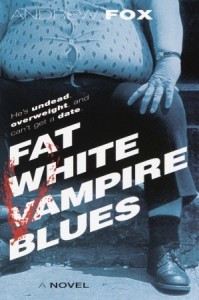
I haven’t posted an edition of Friday Fun Links in a while, but I stumbled across an article which has gotten me back in the saddle (at least for this week). Those who’ve read Fat White Vampire Blues know that I’m not adverse to potty humor; in fact, I’m rather fond of it (having three boys between the ages of six and nine in the house helps). So, when I came across this article announcing that Hitler’s toilet (actually, the toilet from his mega-yacht) has spent every year since 1945 in a suburban town in New Jersey, and it recently went on tour in England, well… I just had to share.

Just one link an edition of Friday Fun Links does not make. So I had to check if there had been any other interesting toilet-related stories in the news. Turns out, yes, there have been. Suwon, South Korea is now home to the world’s only potty-centered theme park. And I’m sure you’ll be happy (and maybe even relieved) to learn the following: “the proceeds from the museum will go towards cleaner toilets around the world…”

Here’s a video link for those potty fans unable to make a trip to South Korea, plus a little background on the Mr. Toilet House and its builder, Sim Jae-Duck.

Needless to say, I was stunned to learn that the Mr. Toilet House was not the world’s first toilet museum; an institution in India can lay claim to that honor.

All this potty news got me thinking about the original Mr. Toilet, the reputed inventor of the flush commode, Thomas Crapper. Unfortunately, just a wee bit of internet research debunked my favorite story about the man, how his products had led to the origin of the words “crap” and “crapper.” As it turns out, the Gladstone Pottery Museum, “the only complete Victorian pottery factory from the days when coal-burning ovens made the world’s finest bone china,” was more than happy to dispel all the myths circulating around the illustrious Mr. Crapper. Disappointingly, he didn’t invent the flush toilet. All my illusions are shattered, shattered, I tell you!

If, however, now that I have pissed all over the legend of Thomas Crapper, you still insist on deifying the man and outfitting your home with genuine crapper equipment, rest assured that you are not out of luck; Thomas Crapper and Co. Ltd., Producers of the World’s Most Authentic Period Style Sanitaryware, are more than happy to supply you with the bathroom of your Steampunkiest dreams.

Update: So sorry! Links were not properly flushing before, but they are fixed now.

Heading Off to MarsCon 2013

For the third year in a row, I’ll be heading down to Williamsburg, Virginia for MarsCon. Unfortunately, this year, unlike last, I won’t have my family with me. One by one, the boys have been dropping with various varieties of the winter crud. It’s a real shame, because MarsCon features one of the best tracks of family/children-friendly programming that I’ve ever encountered. And the boys were tremendously looking forward to it (and to the indoor swimming pool at our hotel). (Whoops! Not so fast! See update at the bottom of this post.) I’m not in the best of shape myself, with my wheezing and sneezing, but it looks as though I will drag myself to the con, anyway, because (a) I don’t like backing out on commitments, and (b) I booked my hotel room through Priceline, and my booking is non-refundable. So, if I’m paying whether I go or whether I stay home in bed, I might as well go stay in bed at the Clarion and drag my carcass over to the con as needed.

Here’s the general info on the con:

MarsCon 2013
Crowne Plaza Williamsburg at Ft Magruder
6945 Pocahontas Trail. Williamsburg, VA 23185
(hotel is currently sold out; if you want to go, check with the Clarion down the road, where I’ll be staying)
Writer Guest of Honor: David B. Coe (very nice guy!)
At the Door Registration Rates for the Weekend:
Adult – $45.00
Children (6-12rs Old) – $22.00
Children (1-5 yrs old) – Free with adult
Student/Military Rate:
This year MarsCon will offer a discount to Students and Active Military, for a Saturday Only! pass, of $25.00. ID must be presented.

For anyone interesting in where I’ll be at the con, here’s my schedule:

Friday, January 18, 2013

They Rise Again! Discussing Reborn Monsters like Vampires, Zombies, Mummies & Frankenstein
8 PM – General Longstreet’s
Tony Ruggiero (M), Tim Liebe, Andrew Fox
Undead monsters are doubly appropriate to our theme of rebirth: they’ve been reborn from the dead, and every few years their popularity is born again. Our panel of experts will examine as many classic and current favorites from fiction, film, and elsewhere as their hour of time will allow. Come prepared to share the undead that are unforgettable to you.

Saturday, January 19, 2013

Writing 101 Workshop
11 AM-1 PM – Abraham Lincoln
Allen Wold, David B. Coe, Darcy Wold, Danny Birt, and Andrew Fox
Hundreds of writers have benefitted from Allen Wold’s instruction at MarsCon in the years that he has led our writing workshop. Sharpen up your pencil or charge up the laptop’s battery and come ready to write and take constructive criticism from Allen and his team of successful writers.

Guest Authors Reading
4 PM – Stuart’s Redoubt
Steve White (M), Marina Sergeyeva, Will McIntosh, Andrew Fox, Barbara Friend Ish
It’s a second hour of MarsCon’s fantastic writer guests featured in eight minute sets. This is your chance to see what’s forthcoming from these creative talents, get an autograph, or see which writer’s works you’ll want to seek out for your next read.

Sunday, January 20, 2013

Post with the Most: Starting a Blog
10 AM – General Early’s
David Coe/D. B. Jackson (M), Tamora Pierce, Andrew Fox
Think you’ve got something to say? Perhaps blogging is for you. And who better to learn about it from than three of MarsCon’s best authors, including two Guests of Honor. They’ll explore both the mechanics of starting a blog, hints for finding readers, and advice for crafting the best of posts. Get up and get motivated with this excellent session.

Updating a Classic Group Write: Authors Re-imagine a Classic Scenario Live
Noon – General Hooker’s
Danny Birt (M), Stephen Simmons, Andrew Fox, Patrick Vanner
Four great writers will create a new version of a classic story with help from suggestions from the audience regarding the story to revise, the characters, the setting, and the some of the conflicts and plot elements. With your help, they’ll spin a new tale from familiar straw. Come and get insight into the creative process at work and enjoy a great story at the same time.

Remembering Ray: a Bradbury Memorial Hour
2 PM – Stuart’s Redoubt
Andrew Fox (M), Diana Bastine, Lyn C.A. Gardner, Mary and Terry Gray
We lost one of the all-time greats last year, that grand old man of science fiction and fantasy, Ray Bradbury. The panelists will each discuss the influence Bradbury had on their writing or fandom and offer appreciations of some of his great works such as Fahrenheit 451, The Martian Chronicles, Dandelion Wine, and Something Wicked This Way Comes. Then they’ll open up the floor for your remembrances of Ray. Think about when you first encountered this giant or what you took away from one of his masterworks and come prepared to share.

UPDATE: No sooner than ten minutes after I posted this, my wife called to report that the boys are (a) devastated at her announcement that they won’t be going to MarsCon, and (b) insisting that they’re all feeling better. And (b) appears (at least according to Dara) to not be complete BS. So, now it appears I will have the full family in tow, after all. Much happiness ensues! I only hope their recoveries can last through the full weekend.

The Good Humor Man Now Only $1.99 in Kindle

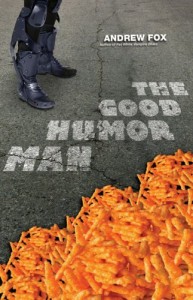
For those of you who have been procrastinating on picking up a copy of my blistering satire of the nanny state, The Good Humor Man, or, Calorie 3501, procrastinate no longer! The Kindle edition of one of Booklist‘s Top Ten SF and Fantasy Books of 2010 is now available from Amazon for the low, LOW price of only $1.99! That’s right — for the price of a medium cup of Starbuck’s Coffee, you could be enjoying the adventures of ex-liposuctionist, soon-to-be-ex-Good Humor Man Louis Shmalzberg right now!

But don’t delay! Because I have no idea when Amazon will decide to boost the price back up again!

UPDATE: I just found out this price reduction is for today only, expiring at midnight, 12/6/12 Pacific Time. My book was one of nine science fiction books selected for Amazon’s Daily Kindle Deal.

UPDATE TO THE UPDATE: Please disregard the Update above! This promotion is still going on. So you procrastinators aren’t out of luck yet! Curl up with your Kindle and a Big Gulp soda and giant bag of Cheetoes and wonder how Elvis will manage to save the world sixty-four years after his premature death!

Watching the Sausage Get Made

“Laws are like sausages, it is better not to see them being made.”

–Otto von Bismarck

Based on some of my and my wife Dara’s recent experiences, I would add two more items to Bismarck’s list: journalism and voting procedures.

Most of us regularly consume the end products of both journalism and elections and give very little thought to how these end products are made. We assume (both out of convenience and a desire to coddle our mental health) that these products, like sausages, are made in a hygienic, properly regulated fashion by well-trained technicians who take care not to allow germs or foreign matter to get in the mix.

We shouldn’t assume such things.

For years now, I’ve read and heard complaints that the bulk of mainstream print and broadcast news media (CBS, NBC, ABC, PBS, CNN, The New York Times, The Washington Post, to name the major players) slant their coverage to provide support for liberal/left/progressive causes, political candidates, and points of view. For a consumer of media news, most often very distant from the events and persons being covered, it can be very difficult to judge the validity of such complaints. One can try to “balance” one’s news consumption by making a point of paying attention to reports from media which represent themselves as being on the more conservative side of the political spectrum (Fox News, conservative talk radio, various conservative or libertarian blogs), but then one is faced with another, symmetrical problem, that of potential (or explicit) bias coming from the opposite pole. One can’t simply assume that the “truth” lies at the midpoint between the left-leaning, mainstream news media and the right-leaning alternative news media. Just as a broken clock is right twice each day, so the possibility exists that one or the other of the “wings” of the news media has gotten a story right, despite the journalist’s or commentator’s biases.

One is on somewhat firmer ground in attempting to ascertain the validity of claims of bias in news reporting when it comes to observing which stories receive any coverage at all. For deciding which events “deserve” coverage is just as powerful (if not more powerful) a tool as deciding how to report on an event, if one’s goal is influencing public knowledge and public opinion to bend in a preferred direction. Ignorance of an event or development can be just as much a controlling factor in establishing a baseline of public opinion as slanted reportage of an event. For a consumer of news reportage, an outside observer, this form of bias is easier to spot. Did one “wing” of the news media cover a particular event and the other “wing” ignore or mostly ignore it? An outside observer can ascertain this without much difficulty. Did the story or event which one “wing” failed to cover have objective newsworthiness? Would a reasonable person decide that the story or event could have a significant impact on the safety, economic well-being, or social or political interests of members of the public? If the answer is yes, and yet the story or event was ignored by one “wing” of the news media, then an observer is on solid ground in wondering why the story was ignored. Whose interests are being served? (For an instructive case history of this phenomenon in action, Google “Benghazi” “embassy” “terrorists” for the period October 26, 2012 through October 29, 2012 and see which news sources pop up… and which do not.)

But one is on the firmest ground of all in detecting media bias when one finds oneself (or one’s close confidents) in the middle of a newsworthy event. Then one is no longer an outsider observer trying to peer through the sausage factory’s tinted windows… being inside the factory itself, one enjoys the dubious pleasure of watching the sausage get made.

My wife, Dara L. Fox, served as a volunteer poll watcher for the Republican Party at a voting location in Woodbridge, Virginia, part of Prince William County in Northern Virginia, on November 6, 2012. She personally witnessed numerous incidents of either explicit or likely voter fraud during the fourteen hours she spent at the polling location; all of these incidents were overlooked, excused, or in some cases abetted by the paid poll workers. (I provide Dara’s own detailed account of these incidents later on in this article.) Under the rules by which she was required to operate as a volunteer poll watcher, she was forbidden to speak to any of the voters who engaged in questionable activities. She made numerous calls to the Romney campaign’s lawyers, but by the time those lawyers arrived at her location, the individuals she had called about had departed, and the overcrowding and barely-controlled chaos of the polling place precluded the lawyers from doing much questioning or observing themselves.

Dara arrived home greatly upset by what she had witnessed. I encouraged her to write it all down, sticking only to what she personally saw. I suggested that she mail and email her observations to the state’s Attorney General and the State Board of Elections, as well as to local media. The Attorney General’s office responded that Attorney General Ken Cuccinelli had no jurisdiction in the matter and suggested that she send her complaint to the State Board of Elections. The State Board of Elections responded that they could take no action unless they received a request from the Prince William County Board of Elections; so Dara then emailed her statement to that local body. Meanwhile, the hosts of WMAL-FM’s morning show invited her to phone in as a guest. Several weeks passed with no response received from the Prince William County Board of Elections, until, just today, following more coverage of potential voting fraud in Virginia on WMAL-FM, a representative from the county board emailed Dara, claimed that the board’s email system had been experiencing “troubles,” and asked her to resend her statement to a different address. The county board also invited her to speak at an upcoming meeting.

Between Dara’s interview on WMAL a few days after the election and now, other poll watchers have come forward to report their own experiences witnessing questionable activities and potential incidents of fraud at Virginia voting stations. To their credit, the hosts of WMAL’s morning show have stayed on top of the story. Recently, they invited Virginia Attorney General Ken Cuccinelli to appear as a guest, and they read to him on-air the incidents of alleged voter fraud which their listeners had emailed to them. Cuccinelli, who is running on the Republican ticket for governor, expressed his own frustration that his office lacks standing to investigate complaints of voting fraud.

Have any representatives of the prominent mainstream news media touched this story? Yes, they have. Thus far, editors, reporters, or bloggers employed by The New York Times, The Washington Post, and The Huffington Post have reported on this story. Did these renowned purveyors of investigative journalism bother to, you know, investigate the numerous allegations of widespread voter fraud in Virginia, the sources of said allegations all being readily identifiable due to their having spoken on WMAL? No, not as of this date, they haven’t. So, if they haven’t attempted to verify the truth of the fraud allegations, which elements of this story have they exclusively focused on? What else is more newsworthy?

Wait for it…

The fact that WMAL has dared to cover allegations of voter fraud, thus joining what The New York Times refers to as “the voter fraud fringe,” is the story according to these three mainstream news outlets. That, and the possibility that Ken Cuccinelli may agree with one of WMAL’s morning show’s hosts that voter fraud in Virginia helped get President Obama reelected.

From Andrew Rosenthal, editor of The New York Times’ Editorial Pages, comes a blog post dated 11/27/12 entitled “Life on the Voter Fraud Fringe.” Here’s a taste:

The only “problems on election day which need to be addressed” are the broken machines, inadequate polling stations and outrageously long lines. …

In this election, like in the elections before it, there is absolutely no evidence that people were trying to vote when they had no right to. …

This all goes without saying that Mr. Obama trounced Mitt Romney in the electoral college and won the popular vote. His victory had nothing to do with voter ID requirements, except perhaps that in some places he might have done better if the Republicans had not managed to put in place ID requirements that were designed to suppress minority votes and, therefore, Democratic votes.

Uh, Andrew… before you so unequivocally state “there is absolutely no evidence that people were trying to vote when they had no right to,” might I suggest that you direct some of your coworkers, those individuals colorfully described as “investigative reporters,” to spend fifteen minutes speaking with my wife?

And what about The Washington Post, the major newspaper in whose backyard these incidents of voter fraud allegedly took place? Aren’t they famed worldwide for having tenaciously dug into a little matter from back about 1973-74 called Watergate? Don’t they have a deserved reputation for excellence in investigative journalism? What was Virginia Politics reporter Laura Vozzella’s take on the story? Here’s a clue: her article is entitled “Cuccinelli Seems to Agree Voter Fraud Helped Obama.” Published the same day as Andrew Rosenthal’s opinion piece, it essentially mirrors Rosenthal’s view, while providing a bit more in the way of background on the exchange between WMAL’s morning show hosts and Ken Cuccinelli:

The exchange, first reported by the Virginian-Pilot, prompted the state Democratic Party to accuse Cuccinelli of spreading “voter fraud conspiracy theories.” …

Brian J. Gottstein, Cuccinelli’s communications director, said Cuccinelli was not suggesting that the election had been stolen, but merely echoing the hosts’ frustrations with his inability to launch voter fraud investigations. Gottstein called controversy over the comments — they were picked up by news outlets ranging from The Huffington Post and a New York Times blog — “made-up news.” …

“Reading these emails, you just get furious about what happened on Election Day in some precincts,” [WMAL morning show host Brian] Wilson said. “Look, something went on in some precincts that wasn’t copacetic. It wasn’t right. And it’s frustrating to hear you, the top law enforcement officer the commonwealth of Virginia, to say, ‘I’m sorry, my hands are tied.’”

Cuccinelli: “And they are.”

Gottstein said Cuccinelli was only responding to the hosts’ frustrations about his inability to launch election fraud cases on his own.

“The two WMAL radio hosts brought up example after example of alleged voter fraud issues surrounding election day and, frustrated, asked the attorney general over and over again why he couldn’t conduct investigations into many of them,” Gottstein said via email. “After six minutes of listening to these examples, the attorney general said, ‘Your tone suggests you’re a little upset with me. You’re preaching to the choir. I’m with you completely.’ When you listen to the whole eight-minute interview and not just a 20-second clip of it, it’s obvious he was referring to his frustration and the hosts’ frustration that his hands were tied in most of the incidences because Virginia law doesn’t allow him to open investigations into election irregularities on his own. The full context of the interview shows it’s clear he was referring to the bevy of irregularities the hosts cited, NOT just to Ms. Jacobus’s one claim about the president, which is what the media has focused on today.”

Paige Lavender of The Huffington Post, getting to the story the day following Rosenthal’s and Vozzella’s pieces, echoes their earlier takes, sexing it up a bit with the title, “Ken Cuccinelli, Virginia Attorney General, Agrees With Conspiracy Theory On Obama Win.”

And thus, for those news consumers who haven’t listened to Dara’s interview on WMAL or that station’s subsequent follow-up stories interviewing other witnesses to potential voter fraud, the story in Northern Virginia becomes, not that widespread voting fraud may exist in Virginia and may have influenced the recent elections (and may influence future elections), but that right-wing talk show hosts are encouraging a “voter fraud fringe” made up of “voter fraud truthers” and that Republican Attorney General Ken Cuccinelli may be pushing a conspiracy theory (rather than bemoaning the fact that his office has no jurisdiction over voting fraud).

Hey, editors and reporters at respected, widely-read or viewed news outlets (particularly those of you at The Washington Post, who, I shouldn’t have to remind you, cover news and politics in Northern Virginia)? I realize that you all are seriously overworked, what with staff cutbacks and whatnot. So I’m going to make things as easy as possible for you. Below is my wife’s statement of what she saw at the Woodbridge, Virginia polling station on November 6, 2012. Read it. You may have questions. Feel free to address those questions to her directly. You may contact her through the links I provide on my Contact Me page. She is more than happy to speak out about what she saw.

To Whom It May Concern:

I served as a volunteer poll watcher for the Romney campaign under the Project ORCA operation on Tuesday, November 6, 2012. As a poll watcher, I saw many suspicious things that led me to believe that voter fraud was rampant and went unstopped during the day, causing Gov. Romney and the Republican candidates to lose the election. I served along with three other Project ORCA volunteers and two Democrat poll watchers at the Elks Lodge at 14602 Minnieville Rd., Woodbridge, VA 22193. One of the other Project ORCA poll watchers was named Laura Lovelace, and she and I discussed many of these observations throughout the day; and I believe she would confirm that what I saw was also what she saw. I would be willing to testify under oath and in any legitimate forum on what I saw and believe to have happened.

I arrived at the polling place at approximately 5:40 a.m. I went into the polling place and showed my credentials to the Chief who showed me where to sit behind the poll workers who would be checking voters in to receive a voting certificate. All of the poll workers were either African American or Hispanic, with the only Caucasians being the Project ORCA watchers. The voters waited in a long line that went outside the building at all times during the day. At one point, probably around 11:00 a.m., I noted that the line was about 300 people long. The line did not break at any time during the day, and there was no time to take a break during the entire day from 6:00 a.m. until the final person voted at close to 8:00 p.m.

Throughout the day, I took note of many irregularities besides the abnormally long lines. The poll workers who regularly work the elections said that they had never seen turnout like what was present. I believe the lead worker said about three times as many people as usual turned out that day to vote and that it is usually a quiet, slow precinct. There were three parts to the voting process. First the voter waited in line to get to the point where I was standing and watching, which was the voter check in, where ID was checked and verified and voting certificates were given out to qualified voters. After receiving a voting card, the voters then stood in line to cast their votes at one of five voting machines. After voting, the voters stood in line to turn in their voting card. Each phase of the line was long and the lines all snaked around at all times.

I was only able to observe the check in phase. As people approached the station of four poll workers who were checking voters in, the voters presented one of the required forms of ID to the poll worker. The poll worker then stated the voter’s name, found them on the database, and then asked for the voter to state his/her name and address. Many, many people were unable to state their names and addresses without assistance. Many, many people said the name was incorrect on their ID due to them getting married or divorced. Many, many people said that the address on their IDs were incorrect due to them having moved recently. Many could not state either the address on their ID or their current address. Many, many people could not speak English and could not follow the directions of “state your name and address.” On the app from which I was checking names, the voter’s name and age appeared. Many, many times, I did not believe that the voter was the age stated on the app. Many, many times, when I went to check off the voter as having voted, the voter was already checked off as having voted. Several times, I would swear that I saw the same person voting twice or heard the same name voting twice, when the app stated that only one voter in the precinct had the stated name. Many times I saw a person who looked Hispanic answer to a name that he or she could barely pronounce that was obviously representative of some other ethnicity, such as Asian or Middle Eastern.

About half of the time that a person had a name or address conflict, that person was sent to the chief to have his/her credentials validated. Each time, that person was allowed to vote, as I saw no provisional ballots recorded throughout the day. About half of the time the person was allowed to verbally correct his/her name or address and was sent to the next phase of the line without having to go to the chief to be approved. I believe a good 10 to 15% of those who voted had questionable ID and qualifications. At one point in the day, an announcement was made that a complaint had been called in to the Board of Elections that handicapped people were not being allowed into the building to vote. The chief made this announcement and stated that it was an untrue allegation. I did not see any handicapped people going through the voting line.

Additionally, about four times during the day, the line was stopped due to too many people being in the building. These people had been processed and were either waiting to vote at the machine or to turn in their tickets. All voter ID checking stopped for about 20 minutes while the line of people inside diminished some. At these times, I do not know if voters standing in line outside gave up and left, as the line was not moving. Furthermore, during the late morning from about 10:00 a.m. to about 1:00 p.m., two of the voting machines were broken and could not be used. I heard that one was spitting out voting tickets and one was not recording votes properly. These machines were both fixed at some point in the early afternoon, but I do not know how many votes may have been affected or how much longer the lines were due to these machines being down. Also, due to the long lines, people who had been processed to vote and were in line to go to the voting machines said they could not wait any longer, due to needing to go to work or having an appointment, and these voters left without voting after having been processed. I do not know how many people were processed to vote and then left without voting.

I believe that most people do not have three hours to wait in line to vote, and it is strange that all of these people with fishy IDs had hours to stand in line and vote. I found numerous blue Democrat ticket sheets showing people how to vote strewn around the polling place. With the lines being long and me not being able to talk to voters as a poll watcher, I had no recourse to accuse suspicious individuals of not being who their ID said they were. I did call to the Romney headquarters and report my suspicions several times, but I do not know what they could have done about the situation, as I could not pull suspicious people out of line.

I find it hard to believe that a fair and clean election was held at the precinct where I worked. I did feel that the precinct workers were hostile to me when I arrived. I was told that there was never a turnout like there was for this day and never the number of poll watchers as well. I think many people voted twice. I think many people voted falsely. I think voter fraud did occur. I believe that requiring photo ID would help to stop some of what I perceived as voter fraud.

Thank you for reading this, and I hope that you are able to follow through on making the next election less full of illegal votes and voters.

Sincerely,

Dara L. Fox

****************

One last word from me. Under existing state law, voting in the Commonwealth of Virginia takes place under the honor system. Voters are required to be U.S. citizens. Voters are required to be who they state they are on the identifying document they provide to a poll worker (which is not required to have a photo attached). Voters are expected, on their honor, to tell the truth in both instances.

The honor system breaks down where there is no honor. That is just as true in our news rooms as it is in our polling stations.

Oversharing Too Much?

Prolific writer and blogger Dean Wesley Smith recently published an article entitled “The New World of Publishing: Promotion.” His Rule #3 for writers snagged my attention because it had direct bearing on a pair of experiences I’d recently had in the world of social media. Here’s the passage:

“3… Never, anywhere (except with your closest friends), talk about politics or religion. Anywhere. Just will cost you a ton of readers. (Added note: Fine to write about it in your fiction. Just don’t talk about it in your social media. You want everyone to buy your book, not just people who agree with you.)

In this modern age of immediate access to a multiplicity of social media outlets (Twitter, Facebook, blogs, message boards, etc.), this can be hard advice to follow (particularly for the more garrulous among us). However, purely as career advice, I agree with it one hundred percent. (I emphasize that italicized clause because there are times that a writer may feel, with much justification, that he or she must consider matters beyond what is good for the career; I’ll speak more of this later in my article.)

Social media can be both seductive in its faux intimacy and misleading due to the invisibility of its reach. Note that in his advice above, Smith directs us to steer clear of discussions of politics or religion except with our “closest friends.” The danger of social media for writers (most of whom would number among their primary goals attracting readers and selling their works) is that sites such as Facebook are set up to lull us into the notion that we are, indeed, having a chat with our “closest friends” – when, in actuality, our chat is being “overheard” by dozens, hundreds, or even thousands of silent, invisible eavesdroppers, each of whom may feel compelled to make a judgment upon what we are (oftentimes casually) saying that can impact their decision to buy or not to buy our work.

Before I ever set words to paper, I was a reader. Reading remains my primary hobby and one of my chief pleasures. I’m writing this post from the perspective of a reader, not a writer. In enticing me as a reader, writers make a unique request – they invite me to come share their mind-space for a period of anywhere from a half-hour (a short story) to multiple hours over a period of many weeks (a long novel). That’s a pretty intimate setup. If I’m going to crawl inside someone’s head for any length of time, I want to have positive feelings about that person. I want to like them; otherwise, the experience of crawling inside their head will be icky and off-putting. So, as a reader, I have a strong incentive to maintain a positive outlook on any writer whose works I wish to read (at least those works I intend to read for pleasure, rather than for utilitarian reasons like gathering information).

My wife talked me into getting on Facebook a little over a year ago, about the same time I started blogging. She sold me on the notion it was a tool I could use for two purposes: easily keeping up with what my friends and extended family are up to, and giving gentle “pushes” to my writing projects and signings or convention appearances. I’d say that close to fifty percent of my Facebook friends are fellow writers or editors. Many of them are active on Facebook for the same two reasons I am. Some of them enjoy passing along jokes or funny Photoshop screenshots they’ve come across. Lots of them like to gossip or talk politics; oftentimes, these two latter activities go hand-in-hand. I say that because I believe most objective observers would have to conclude that the great majority of political exchanges on Facebook and Twitter are gossip, rather than attempts at reasoned discourse or persuasion.

Gossip has a scurrilous reputation. But it is an almost universally engaged in activity because it fulfills an important social function – it bonds gossip partners together, and it often helps to define group boundaries, the ins and the outs. Because it is a bonding activity, gossip is fun; this is mortifying, but understandable. Many writers, being engaged in typically solitary work, eagerly grasp whatever opportunities they have to be social with one another. The professional writers’ version of office gossip around the water cooler is huddling together at the hotel bar during a literary convention. Or, at least it used to be. Now, writers can replicate a convention hotel bar anytime they want to, simply by turning on their computer and logging onto Facebook. Their writer and fan buddies are accessible with a few clicks of the mouse.

So far, so good. However, whereas discretion at the office water cooler or the convention hotel bar can be reasonably assured through a toning down of one’s voice, discretion on Facebook (or other social media) requires more planning and technical savvy. Also, Facebook lulls a user into thinking he or she is chatting with a handful of friends – the electronic equivalent of the small, chummy group at the hotel bar – when in actuality the “hotel bar” is in the middle of a stadium stage wired for sound, with a silent, invisible audience numbering anywhere from the dozens to the thousands. Facebook is a public space which masquerades as a private space.

So here I am, your reader or your would-be reader. I have every motivation to like you and to maintain a good opinion of you; perhaps I have already invested a good bit of money in your books and plan to invest time in reading them. I really would prefer not to “overhear” much of what you and your intimates talk about around the “hotel bar.” But in perusing my Facebook feed, seeking interesting or meaningful updates from family and friends, I can’t help but stumble across your gossip sessions. Sometimes they are ugly or offensive. And sometimes, even though I want to think only the best of you, I find myself dismayed.

To illustrate, I’ll share a couple of recent examples (not naming any names).

A friendly acquaintance of mine, a writer of high reputation with whom I’d shared breakfast at one of the major conventions, posted a screen shot of the newspaper and Fox News commentator Charles Krauthammer on Facebook. He did so in order to comment on Krauthammer’s pinched, arguably ghoulish countenance, likening it to that of several horror movie actors; apparently, he’d come across Krauthammer for the first time and, repulsed by his politics, found himself equally repulsed by the man’s appearance. A number of other commenters jumped onto the thread, eagerly adding their own derogatory opinions on Krauthammer’s appearance and competing with each other to come up with the most “hilarious” likenesses for him (Count Chocula being one that sticks out in my memory). I was familiar with a number of the commenters; some of them were respected, highly awarded “gray heads” in the science fiction community, writers in their fifties or sixties – certainly not callow teenagers.

This set my nose out of whack. Not so much because I enjoy many of Krauthammer’s columns, but because I knew he was severely physically handicapped – either paralyzed or a victim of multiple sclerosis, I wasn’t sure which.

I briefly debated what to do. I hoped that my friendly acquaintance and his correspondents were unaware of Krauthammer’s disability. I wanted to think the best of the writer who’d posted the screen shot and started the thread, if for no other reason than I’d just invested in him – only a week before, I’d purchased two of his books, and currently I was shopping for a third, and I had more of his books on my shelves waiting to be read. I didn’t want to be a buttinski or a nosy Miss Manners; but I also didn’t want to think this writer was a jerk. Because if I decided he was a jerk, I wasn’t about to invest dozens of hours in reading his books, and the only thing I could then do with the books I’d already purchased would be to trade them in at my local Second and Charles store for pennies on the dollar.

So, for partially selfish, self-defending reasons, I posted as gentle a rebuke as I could manage: “Folks, you may not be aware of this, but you are poking fun at the appearance of a severely physically disabled person. Just saying…”

The next day, out of curiosity, I checked back on that Facebook thread. What I discovered was illustrative of the seductive power of gossip. The thread’s initiator had “Liked” my comment. He’d gone on to say he’d been unaware of Krauthammer’s disability and had considered taking down the post… but given Krauthammer’s views, it simply felt too good to take shots at him – it was too much fun — so he was letting the thread continue. And the commenters continued merrily along as they had before, some saying that, since Krauthammer had helped intellectually define the Reagan Doctrine of foreign policy back in the mid-1980s, he deserved whatever physical malady he was suffering from.

I looked up the cause of Krauthammer’s disability. Then I posted a message to this effect: “Charles Krauthammer is paralyzed from the neck down due to a diving accident he suffered at the age of twenty. Please feel free to disagree with Krauthammer’s writings or opinions, vehemently, if you wish; I understand that Krauthammer enjoys a feisty policy argument. But to make fun of the man’s stiff facial expressions and physical appearance when this is due to his paralysis… if you persist in this, you should be ashamed.”

To my acquaintance’s credit, he then took down the thread and sent me a private message explaining he had done so. He apologized and said he hadn’t been aware of the severity of Krauthammer’s condition. I told him he was a mensch and that I was relieved he’d done the right thing, because I had a stack of his books sitting in my home waiting to be read.

I inserted myself because I knew this writer personally and thus had dual motivations in maintaining him in my esteem. Another social media mishap didn’t end so well. I didn’t bother pursuing it the way I’d pursued the Krauthammer incident because, for one thing, I had no personal acquaintance with the writer who’d posted offensive material, and for another, what he’d posted had so profoundly offended me that I had no desire to communicate with him and ask if he might redeem himself in some fashion.

This other writer reposted the electronic version of a chain letter. This Photoshopped chain letter called for the outlawing of the practice of circumcision, whether performed for religious or physical hygiene reasons. He did not write any additional commentary, nothing to explain his support of the posting’s urging that an ancient, venerated to some, and widely practiced procedure be not merely discouraged, but outlawed. He simply threw it up on Facebook with the casualness of someone tossing a cigarette butt onto my lawn.

Far more so than disparaging comments about Charles Krauthammer’s appearance, this hit me where I live. Under the supervision of a Jewish physician who was a family friend, I had personally circumcised three of my sons, performing the rite of brit milah with my own hands the same way (okay, using anesthetic cream and a scalpel rather than a stone knife) the progenitor of the Jewish people, Abraham, had circumcised Isaac. In terms of ritual, these three acts were the most meaningfully Jewish acts I had ever engaged in; I truly felt bonded with the entire thread of Jewish experience, with thousands of years of history and millions of lives.

I have no idea of the depth of the re-poster’s attachment to the anti-circumcision movement, nor his reasons for supporting it. It probably took him all of thirty seconds to copy that screen shot and to put it up on Facebook. But those were a costly thirty seconds for him. I’m basically this writer’s ideal reader – we have numerous interests in common, I gravitate towards the sub-genre he writes in, I have lots of discretionary income to spend on new books, and I’m very vocal about championing books I particularly like. Taking all this into account, the writer may have surrendered a couple of hundred dollars of lifetime income by posting what he did, when one factors in the numbers of people I might otherwise have recommended his books to. Casually or not, he offended me so viscerally that it will not matter to me if this person wins the Hugo and Nebula awards every year for the next thirty years running – I simply will not spend a penny on anything he does.

I hope it was worth it to him.

I understand that people want to speak out about matters they are passionate about. In rare circumstances, one’s status as a citizen and/or as a human being may make it imperative to speak out regarding a particular issue; otherwise, one could not peacefully sleep. But, if you are a professional writer or someone who is striving to be a professional writer – a person who derives income from their writing – you need to be fully aware that there are costs involved. If you judge the benefits (to your mental or moral health or the welfare of humanity) to be greater than the potential costs, then, by all means, trumpet your political and religious views from the rooftops, from Facebook and Twitter and what-have-you.

But put some thought into it. Make a reasoned and persuasive argument. Add something new and valuable to the discussion. Don’t just re-post some Photoshop quip (which most likely originated in a teenager’s basement) because it seems righteous or you want to give the giggles to your buddies “around the bar.” You never know who’s paying attention. And you’ll never know the good will you have lost.

Heading Off to Capclave

Capclave Dodo: “Where reading is not extinct”

This Saturday and Sunday, I’ll be attending my local(ish) science fiction convention, Capclave. Capclave is a personal favorite because of its literary-focused programming and its abundance of books dealers. Here are the details:

Capclave 2012
October 12-14, 2012
Hilton Washington DC North/Gaithersburg,
620 Perry Parkway, Gaithersburg, Maryland
$60: All Weekend
$20: Friday
$40: Saturday
$20: Sunday
Special Pricing for Students, Active Military, and Active Military dependents: Saturday $20 / All weekend $25

And here’s my schedule:

Saturday, October 13

Unsung Author: Robert Sheckley (10 AM, Bethesda Room)
Panelists: Michael Dirda (M), Tom Doyle, Andrew Fox
Robert Sheckley. He was nominated for both the Hugo and Nebula awards. SFWA awarded him the 2001 Author Emeritus award. Learn more about his career and writings.

Reading (1:30 PM to 1:55 PM, Room 254)
I’ll read a brief selection from my new middle grades book, The Runaways of Mount MonstraCity

Young, Adult, or Both? (4 PM, Salons A&B)
Panelists: Andrew Fox, Ron Garner, Victoria Janssen (M), Morgan Keyes, Diana Peterfreund
How does a YA differ from a children’s book or an adult book? How is the pacing, characterization, and language different or the same? Are there things you can do in one and not the other? Are these distinctions needed? And what about series like Harry Potter in which the children grow up?

RIP Bookstores or Not Dead Yet? (6 PM, Rockville/Potomac Rooms)
Panelists: Andrew Fox, Katie Hartlove (M), Michael D. Pederson, Steve Stiles
With the growth of Amazon online, the demise of Borders, and the rapid adoption of ebooks, does the traditional bookstores have a future? What is the role of bookstores in the age of instantly downloadable ebooks and Amazon Prime? Can we do anything to save the bookstore?

Mass Signing (7:30 PM, Salons A&B)
Panelists: Danielle Ackley-McPhail, Eric Choi, Brenda Clough, David Louis Edelman, Andrew Fox, Ron Garner, Morgan Keyes, Dave Klecha, Jonah Knight, Yoji Kondo (Eric Kotani), Dina Leacock, Edward M. Lerner, Craig Alan Loewen, James Maxey, Mike McPhail, James Morrow, Diana Peterfreund, Lawrence M. Schoen, Darrell Schweitzer, Alan Smale, Bud Sparhawk, Jean Marie Ward, Lawrence Watt-Evans
This is the mass signing held before the presentation of the WSFA Small Press Award.

Sunday, October 14

WWI comeback (11 AM, Bethesda Room)
Panelists: Tad Daley J.D., Ph.D., Andrew Fox, John G. Hemry, Victoria Janssen (M), Jean Marie Ward
It has been nearly a hundred years since the War to end all wars, is this a setting that still has potential? Will the movie “War Horse” and the tv show “Downton Abbey” spark a new interest in fiction set during World War One?

The Bradbury Effect (3 PM, Frederick Room)
Panelists: Roger MacBride Allen, Marilyn “Mattie” Brahen, Andrew Fox (M)
How Ray Bradbury affected authors through his writing and contacts.

I’m really looking forward to the Bob Sheckley and Ray Bradbury panels. Hope to see some of you there!

Baltimore Book Festival Appearances

This coming Sunday, September 30, 2012, I’ll be signing books and speaking on several discussion panels at the 17th annual Baltimore Book Festival. Here are the details:

Festival Dates: September 28-30, 2012

Hours: Friday & Saturday: 12-8pm; Sunday: 12-7pm

Location: Baltimore, Maryland, in historic and picturesque Mount Vernon Place

Attendance: 55,000+ festival-goers over the weekend

Admission: Absolutely FREE and open to the public.

Description: The festival features 200+ author appearances and book signings; 75+ exhibitors and booksellers; non-stop readings and panel discussions on eight stages; cooking demos by celebrity chefs; poetry readings and workshops; panel discussions; walking tours; hands-on projects for kids; live music; and a delicious variety of food, beer and wine.

Here’s my schedule (all times listed for Sunday, 9/30; all panel discussions will take place at the Science Fiction and Fantasy Writers of America Stage):

Noon to 1pm: I’ll be signing books in the Authors Tent

2pm: Vice Squad with Blasters
Can we predict the bad behavior in science fiction? See what scenarios our authors come up with for future misbehavior. Panelists include: Bud Sparhawk, Brenda Clough and Andrew Fox.

3pm: Readings with SFWA Authors
Come listen to SFWA authors read from their work, engage them in Q&A, and win great prizes! Panelists include: Cat Rambo, Raul Kanakai, Sarah Beth Durst, Andrew J. Fox and Brandie Tarvin.

6pm: Movies and Reading
Has the popularity of movie adaptations improved or dumbed down the written word? What about books that were turned into movies; is the union of Hollywood and literature for better or for worse? Panelists include: Andrew Fox, Walter Greatshell and Brenda Clough.

I hope some of my friends and readers will be able to come to the Festival. This will be my first year attending, and this is also SFWA’s first year as an official sponsor/partner of the Festival. Let’s hope for good weather, as this is an entirely outdoor/tented event. No thunderstorms, please!

A Counterproductive Image to Spread to the World

No matter one’s feelings about the amateurishly made film Innocence of the Muslims and the violence and turmoil in the Middle East which this film may have helped ignite (or provided a pretext for), this image, a photo of Egyptian-American Nakoula Basseley Nakoula, the likely true identity of filmmaker Sam Bacile, being taken into law enforcement custody is perhaps the most counterproductive image the United States could share with the more radical elements of the Muslim world.

It is counterproductive for national security, because behavior which is rewarded tends to be repeated again and again — and those predisposed to hate the United States will not pay attention to the extenuating details behind this image (Nakoula was not being arrested but was voluntarily accompanying law enforcement officers for questioning; Nakoula has a prior conviction for financial fraud involving the Internet and may have violated the terms of his parole by producing and promoting the film utilizing the Internet), but will merely see an American being arrested for what the rioters consider the crime of blasphemy against Islam. In the eyes of the rioters, this must be counted a major success. This image is equally counterproductive and corrosive to one of America’s key freedoms, the freedom of speech; seeing Nakoula hauled off in this fashion, who knows how many writers and filmmakers will self-censor their own speech, not wanting to get on the wrong side of the Department of Homeland Security or the FBI?

I’m a writer. A science fiction writer. A good part of the job description of a science fiction writer is someone who takes an idea and stretches it to the breaking point, imagining all possible extrapolations and following those extrapolations wherever the dictates of logic, satire, or social and political critique may take them. Nearly all classic works of science fiction involve this process of extrapolation, which may lead the writer into dangerous waters, probing areas of enormous sensitivity to various sectors of the population (and writers of fantasy and fables often use the same tools). Think 1984 with its warning of totalitarianism spreading to the Western democracies or Animal Farm with its devastating portrait of the moral rot of Communism, or The Humanoids with its statement that relegating all formerly human labor to robots would render humanity less than fully human, or The Handmaid’s Tale with its cry against the influence of conservative Christianity on the administration of the state.

I am not comparing the artistry or the level of thought and imagination that went into Innocence of the Muslims with that of the works I just cited. But the quality of the film is beside the point. Until and unless it is determined that Naloula Basseley Nakoula was acting as an agent of a hostile foreign power, seeking to incite harm against the United States (a possibility which would not shock me in the least), the speech that he engaged clearly falls within the realm of Constitutionally protected speech.

In fact, Nakoula seems to fit to a tee the sort of individual championed by the American Civil Liberties Union — a person engaging in highly unpopular, obnoxious, and potentially inflammatory speech. Noncontroversial speech needs no protection. Assuming, again, that he was not acting as the agent of a hostile foreign power, how is Nakoula’s speech any less worthy of protection under the First Amendment than the parading of American Nazis in full Nazi regalia through the Jewish neighborhood of Skokie, Illinois, a community inhabited by numerous survivors of the Holocaust? Wasn’t the purpose of the marching Nazis to inflict emotional pain and a sense of fear on those survivors and their families? Didn’t the ACLU defend the legal rights of those despicable persons, and weren’t those rights upheld in court and enforced?

I personally consider Nakoula to be equally despicable. When first contacted by the media, he claimed a false identity clearly chosen to throw gasoline onto an already raging conflagration — he said he was a Jewish Israeli-American who had raised five million dollars in funding for The Innocence of the Muslims from wealthy Jewish donors. In actuality (and details continue to emerge), Nakoula is a Coptic Christian of Egyptian background who raised the money needed for his film from family back in Egypt. In all likelihood, he is a man who equally resents and hates Egyptian Muslims and Israeli Jews and who connived his way into harming or seeking to harm both groups. Based on what is known now, I consider him a worm, a moral microbe, a blot on any group he chooses to consort with.

And yet his rights under the First Amendment must be defended. There is good reason that much of the world’s most enduring and significant works of science fiction have been written in the United States and Great Britain. Science fiction is merely one of many fields, certainly not the most significant, to have benefited from the First Amendment. Our First Amendment, grounded in traditions and freedoms with their roots in English jurisprudence, allows for the full extrapolation of ideas — often unpopular, alarming, or even obnoxious ideas — free from fear of governmental interference or censorship. This is one of our great strengths. This is one of America’s most powerful comparative advantages over its rivals, one of the key reasons why many of the world’s most talented innovators have sought to come here and become Americans. It is one of the reasons I consider myself and my family to be blessed to be Americans.

It is a freedom, one of many we possess, which is worth dying for. Allowing a “heckler’s veto” to speech critical of Islam chips away at that freedom. I sincerely hope our law enforcement agencies take this into consideration in their dealings with Nakoula Basseley Nakoula. More images of the type reproduced at the top of this page will merely stoke the triumphalism of Islamic radicals and invite more incidents of the type we viewed with such sadness and disgust this past week. Such images are unworthy of us as a nation.

Isaac, Katrina’s Obnoxious Little Brother

Bringing back some pretty bad, soggy memories...

Another Katrina anniversary. Another storm. This one, thank heaven, a dwarf in destructive power compared with its infamous predecessor.

Even as a relatively weak Category One hurricane, however, Isaac is proving to be troublesome. Some of the most destructive storms to hit the Gulf Coast have been low-velocity but slow-moving storms, such as this one, which cling to an area for days, dumping tens of inches of rain. Already, Isaac has disrupted power to nearly half a million residents in the Greater New Orleans area. The improved Corps of Engineers flood protection system seems to be working well thus far, with only one minor glitch concerning pumping facility controls at the Seventeenth Street Canal, near the border between Orleans and Jefferson Parishes, which has been corrected. Down south, in Plaquemines Parish, near where the storm made landfall, a stretch of parish-built levees have been overtopped, not breached, and the entry of water on the east bank of the Mississippi has flooded an undetermined number of homes with up to nine feet of flooding.

Until three years ago, my family and I lived in a house on the West Bank of the Mississippi, in a suburban portion of New Orleans called Algiers. That area of the city lucked out during Katrina, not being in the East Bank flood zone. However, had Katrina made landfall fifteen or twenty miles west of where it landed, the West Bank’s levee system, then (and most likely still) greatly inferior to the East Bank’s, would likely have crumbled before the force of the storm surge, and my neighborhood would have been underwater. A flood map from The Times Picayune showed the severity of potential flooding on the West Bank, neighborhood by neighborhood. My block could have received up to nine feet of water. My house stood about four feet above the level of the street, on a slightly raised lot, so we could have returned home from South Florida, where we had taken shelter, to find five feet of water in our house.

My mother-in-law and cousins still live in Algiers. Dara and I have many friends in the New Orleans area. Many of them are without power at this point, and Isaac will stay in the area for another full day, continuing to dump rain and lash the city with wind gusts of up to a hundred miles per hour. Please keep the good folks of the Gulf Coast in your thoughts.

Here’s the beginning of an article I posted one year ago today:

“Six years ago, on another Monday, August 29th, Hurricane Katrina, a Category Three storm pushing a Category Five storm surge, slammed into coastal Mississippi. For the first twelve hours after landfall, the city of New Orleans appeared to have avoided the worst. But then the levees designed to hold back Lake Pontchartrain began breaking — the Industrial Canal levee, the 17th Street Canal levee between Metairie and the western parts of New Orleans, the London Avenue Canal levee adjacent to the Gentilly neighborhood, and the Mississippi River-Gulf Outlet levees that had been meant to protect Chalmette and St. Bernard Parish. Within a day, eighty percent of the City of New Orleans had flooded, and nearly all of St. Bernard Parish was underwater. At least 1,836 people died along the Gulf Coast, most from the flooding, making Katrina the deadliest storm in U.S. history since the 1928 Lake Okeechobee Hurricane in South Florida, when approximately 2,500 people were killed.”

Following Katrina, I worked to rebuild the devastated Lousiana Commodity Supplemental Food Program, which lost three of four food warehouses and three-quarters of its vehicles in the storm and the post-storm flooding. I then worked two-and-a-half years with FEMA, part of a management team hired to introduce some program management vigor to the problem-plagued Temporary Housing Program.

I believe it was just a month or two ago that I read that the last FEMA trailer in Southeastern Louisiana had finally been vacated. And now they may have to start in all over again, at least with some folks down in Plaquemines Parish.

Giant Monster B-Movies Round-Up (part 2): More of Toho’s Second String

Continuing my series of mini-reviews of recently viewed giant monster B-movies, this time I’ll serve up another pair of Toho Studios’ lesser-known kaiju and science fiction pictures: Frankenstein vs. Baragon/Frankenstein Conquers the World (1965) and The Mysterians (1957).

Netflix made a boo-boo when they sent me Frankenstein Conquers the World; they shipped the disk containing the Japanese language version with English subtitles. Judah, my youngest, had been very anxious to see this film, what with it containing the first appearance of Baragon, one of his favorite Japanese monsters (he has a Baragon stuffed toy that he loves). I was afraid he would refuse to watch it if it had subtitles, since he had told me, very firmly, that he would NOT watch our VHS copy of Godzilla vs. Hedorah/Godzilla vs. the Smog Monster, due to it being in Japanese with English subtitles. However, the little guy surprised me by acquiescing to Frankenstein Conquers the World with subtitles. My oldest boy, Levi, said he wanted to split the task of reading the subtitles aloud with me. A family activity!

As things turned out, I doubt we would have enjoyed the movie any more had it been dubbed; it’s possible our viewing experience was even enhanced by watching it in its original Japanese. In any case, much of the dialogue was inessential; the pictures told the story. And, oh, what a story!

I’m pretty sure kaiju Frankenstein has the most convoluted origin story of any of the Japanese monsters (with the possible exception of King Ghidorah in the second series of Godzilla movies). The film begins in Germany during the final months of World War Two, inside the laboratory of Dr. Frankenstein (or some other scientist who has taken over Dr. Frankenstein’s work… hard for me to tell with all the confusion surrounding the speed-reading of subtitles to my kids). Nazi soldiers show up to confiscate what is apparently the last remaining piece of the Frankenstein monster — his still-beating heart, floating in a glass jar. They store this in a crate and ship it out to Japan aboard a U-boat, apparently so that Imperial Japan can continue Nazi Germany’s quest for an invincible super-soldier (the thought being that the monster’s indestructible heart might provide a serum or compound which would allow soldiers to regrow body parts lost in battle). The U-boat rendezvouses with a Japanese Navy submarine in the Sea of Japan, and the Germans transfer their strange cargo. But before the two subs can submerge, an American sub-hunting sea plane attacks and sinks the U-boat. The Japanese sub escapes and delivers the monster heart to a research institute located in the center of Hiroshima. Yes, that Hiroshima. The research institute is near ground zero of the atomic bomb explosion. We are then led to believe that the heart survived the explosion and absorbed enough radiation to cause it to grow into an entire person — a new, childlike Frankenstein’s monster, whom postwar residents of Hiroshima assume to be a war orphan.

(I’ve read that an early version of the movie, possibly released to theaters in Japan, actually had a war orphan eat the heart and then mutate into a Frankenstein’s monster-like creature. But in this version, scientists explain that the heart itself grew into the creature.)

Look at that punim!

One of the most amusing aspects of the movie is the multiple instances in which Japanese scientists or reporters insist that one of the curious anomalies about the weird, growing child is that “he is clearly of Caucasian ancestry” (this being necessary because the original Frankenstein’s monster was put together from pieces of dead Central Europeans). However, take a look at that punim — he is clearly NOT of “Caucasian ancestry!” So, the movie scientists seem to be saying, who’re you going to believe – me or your lying eyes?

Also rather amusing was watching and listening to American actor Nick Adams (who also stars in Monster Zero) dubbed into Japanese. The Japanese voice actor’s bass pitch is much lower than Adams’ natural, rather high-pitched voice, so he almost seems to be talking in slow-motion.

But the really fun parts of the movie are the monster fights between Frankenstein and Baragon. Since the actor portraying Frankenstein is unencumbered by a massive rubber suit, he is able to move and fight much more fluidly than your typical kaiju. Just to ensure that Baragon would not seem overmatched, the producers gave the subterranean dinosaur the ability to leap great distances. So the extended fight scenes are very involving, more like the fights in Hong Kong kung-fu flicks than the typical lumbering shoving matches featured in kaiju movies. Also, the Frankenstein creature is portrayed in a sympathetic light and has more of a relatable personality than a typical kaiju. A semi-sequel was made the following year in 1966 — The War of the Gargantuas. I say “semi-sequel” because, although elements of the earlier movie’s story are clearly referenced in Gargantuas, and the Brown Gargantua’s personality and motivations carry over from those of the Frankenstein creature, the two monster’s designs are very different; Brown Gargantua looks much more like a Bigfoot monster than a Frankenstein’s monster.

Apparently this DVD edition of Frankenstein Conquers the World was released in conjunction with fresh home editions of The Mysterians, Mantango/Attack of the Mushroom People, Dagora, the Space Monster and Atragon (the Frankenstein disk includes promos/theatrical trailers for each of these Toho films). Judah told me he wanted to see all of them. Unfortunately, the copy of The Mysterians I had available to show him was an old VHS copy I had picked up used at a science fiction convention. Picture quality was pretty sub-standard, even for VHS; and given that the colorful, extravagant production design of The Mysterians is its major calling card, that was a bit of a shame. (I may have to hunt up a DVD of this film and see if improved picture quality makes me think more highly of it.)

The film’s story (to be echoed in many later Toho films that featured aliens and kaiju) cannot be accused of being overly ambitious or creative – an alien race from a dying world wants to take over Earth; they initially pretend to be Earth people’s benefactors, or at least not overtly hostile; when their falsehoods need to be abandoned, they then use what seems to be superior technology to overcome Earth’s defenses. However, the plot and screenplay are full of holes big enough to pilot a spacecraft through. We are led to believe that the alien incursion is of fairly recent vintage; they have been secretly building an underground fortress in Japan, but they haven’t quite finished it when the film begins, and the film’s climax features a race between the aliens completing their fortress and making it impregnable and the United Nations of Earth developing and fielding their own super-weapons. However… the aliens’ initial attack on Japan comes courtesy of a gigantic robot (called Mogera) which emerges from inside a mountain. Japan is one of the most densely populated nations on Earth – how did the aliens manage to dig out the inside of a mountain and place a fricking hundred-foot-tall robot inside it without anyone noticing? For that matter, where have they been getting all their building supplies to create their giant underground fortress? From a Japanese branch of Home Depot? If they brought the supplies in from their home planet, the landings of that many tremendous cargo rockets would’ve attracted a bit of attention, too, no? The United Nations manages to field two huge rocket battlecraft to engage the Mysterians’ fortress. The Mysterians blow up one of the battlecraft with a ray blast, but fifteen minutes later in the film, the same ray blast strikes the second, seemingly identical U.N. battlecraft with no effect whatsoever.

The Mysterians (1957) can be thought of as a Japanese reply to This Island Earth (1955), Earth vs. the Flying Saucers, and Forbidden Planet (1956), three hit American science fiction films from the two prior years. What it lacks in script sophistication (a highlight of Forbidden Planet, which, after all, was loosely based on Shakespeare’s The Tempest), it makes up for with the sheer exuberance of its production design – costumes, miniatures, and sets. The aliens’ costumes are delightful, a cross between the couture of Pop Art bikers and gay vampires (right after the film, Judah immediately assembled his own version of a Mysterian uniform, which he wore continuously for the next three days). The giant robot Mogera is very memorable — sort of the Michelin Tire Man with the head of a tin anteater. Best of all are the ships and weaponry, all pieces from a ten-year-old’s fantasy space war play set. Toho’s artisans fashioned miniatures which would serve them well in many kaiju epics to come, particularly the mobile electro-ray projectors mounted on military flatbed trucks. And those hovering U.N. battle rockets look mighty cool, too.

The American film that The Mysterians most closely models is Ray Harryhausen’s stop-motion alien extravaganza, Earth vs. the Flying Saucers. It’s a little dumber, perhaps, than Harryhausen’s picture (which, for once, did not have the American military acting like a bunch of bellicose idiots), but it has the advantage of being far more colorful — Toho’s first movie to be filmed in beautiful Tohovision! That, and those funky alien uniforms (so much more fabulous than the aliens’ suits of armor in Earth vs. the Flying Saucers), certainly counts for something, I think…

Giant Monster B-Movies Round-Up (part 1): Toho’s Second String

As I’ve mentioned many times on this blog before, one of the great pleasures of raising children is getting to enjoy many of one’s childhood enthusiasms all over again, this time experiencing the “doubled vision” of seeing them through one’s own, matured eyes and the less jaded eyes of one’s kids.

With this in mind, I’ve been having a grand ol’ time renting vintage monster and kaiju movies from Netflix and watching them with my boys. Judah, my youngest, is my most enthusiastic co-conspirator, but both Asher and Levi will usually plop down on the bed with the two of us to watch whatever “monstrous” piece of celluloid Dad has selected for the evening. A bonus of this is that I’m actually getting to see lots of films that I only read about as a kid – a number of Japanese horror films, for example, had only limited exposure in the U.S. and weren’t part of the popular TV movie packages, shown by independent TV stations, that I relied upon during my childhood viewings. I don’t recall ever seeing Atragon, The Mysterians, Frankenstein Conquers the World/Frankenstein vs. Baragon, Dagora, the Space Monster, Gappa, the Triphibian Monster, Yongary, Monster from the Deep, or Varan the Unbelievable as a kid. However, now, thanks to the ubiquity of DVD players and the hunger of services such as Netflix for product, all of these movies are currently available, and I’ve either recently watched them with my boys or have stuck them in my order queue.

(Special bonus for you Toho Studios fans – here’s a marvelously informative year-by-year listing of all the films Toho has made, from their founding in 1935 to 2012.)

Over the next few days, I’ll be writing a bit about giant monster movies I’ve recently shared with my kids, listing them in descending order of quality and entertainment value (mind you, these two aspects do NOT necessarily track in parallel, as any fan of 1950s monster movies and Japanese kaiju films will attest).

At the top of my list are several of what must be considered Toho’s B-list of horror and science fiction films (their A-list, or most popular and best-remembered horror and SF movies, are the Godzilla series and their most closely-related offshoots, Mothra and Rodan). Toho was a very prolific company in the middle decades of the twentieth century, producing films in a wide variety of genres – gangster pictures; war films; romance movies; and classics of world cinema such as Seven Samurai (1954) and The Throne of Blood (1957).

Beginning with Godzilla, King of the Monsters in 1954, the studio delved into the realms of science fiction and horror, producing at least one movie per year in these genres over the following decade and a half:
Godzilla Raids Again and Half Human in 1955;
Rodan (in color!) in 1956;
The Mysterians (also in color) in 1957;
Varan the Unbelievable and The H-Man in 1958;
Battle in Outer Space in 1959;
The Human Vapor in 1960;
Mothra in 1961;
King Kong vs. Godzilla and Gorath in 1962;
Atragon and Matango/Attack of the Mushroom People in 1963;
Mothra vs. Godzilla/Godzilla vs. The Thing, Ghidorah, the Three-Headed Monster, and Dagora, the Space Monster in 1964;
Invasion of the Astro-Monster/Godzilla vs. Monster Zero and Frankenstein vs. Baragon/Frankenstein Conquers the World in 1965;
Ebirah, Horror of the Deep/Godzilla vs. the Sea Monster and The War of the Gargantuas in 1966;
Son of Godzilla and King Kong Escapes in 1967;
Destroy All Monsters in 1968, arguably the pinnacle of the original Toho kaiju cycle, starring, as it did, virtually all the monsters they had fielded in the prior decade;
and All Monsters Attack/Godzilla’s Revenge in 1969, to many fans, the nadir of the original kaiju cycle, making heavy use of footage already seen in Son of Godzilla and Godzilla vs. the Sea Monster and centering the story on a young boy’s wish fulfillment daydreams (which works better for young viewers than it does for kaiju fans in their twenties or thirties or, Lord help me, forties).

The studio continued pumping out at least one monster picture each year, until they took a break following 1975’s Terror of Mechagodzilla. With the exception of 1977’s The War in Space, which was released direct-to-VHS in the U.S., Toho did not return to the horror or science fiction genres until 1984’s The Return of Godzilla (released the following year in the U.S. as Godzilla 1985, which I recall dragging my then-girlfriend Leslie to a cheapie theater in New Orleans to see).

The best (or the most entertaining) of Toho’s B-list that I recently watched was – surprise, surprise! — King Kong Escapes. I say “surprising” because I was more than a little amazed by just how much I enjoyed this film. I’ve gone through three stages, it seems, regarding Toho’s two King Kong films. King Kong vs. Godzilla was one of the very first kaiju pictures I ever saw; my parents let me stay up “late” as a five-year-old to watch it on TV. For years thereafter, I claimed it as my favorite movie of all time. However, when I entered junior high school, I began doing some serious study of stop-motion animation, with the hope of learning to become an animator myself; I studied the work of Willis O’Brien, Ray Harryhausen, and Jim Danforth and even wrote a thesis paper in eighth grade on the history of stop-motion animation, following up the next year with an attempt to make my own stop-motion fantasy film. You might say I became a “stop-motion snob,” staring down my nose at all inferior forms of special effects, particularly the use of lizards with glued-on horns and fins to portray dinosaurs, and men in suits to portray various giant monsters – including King Kong. Thus, I had to disavow my earlier, “childish” enthusiasm for King Kong vs. Godzilla (and admittedly, the King Kong outfit used in that film was not one of Toho’s better designs). Until just recently, I never had the opportunity to see Toho’s follow-up, their second and last King Kong effort, King Kong Escapes, but I tarred it with the same brush, assuming it was another attempt to profit off Willis O’Brien’s legacy while dishonoring his technical and artistic accomplishments.

Hey, one’s perspective changes as one gets older (particularly after one has kids). Now I’m able to look at these Toho second stringers with the eyes of a little boy again, and in that light, King Kong Escapes is fantastically entertaining. It helps that Toho did a much better job with the Kong suit the second time around; it looks much more gorilla-like than the suit used in King Kong vs. Godzilla (the arms are longer and the legs are proportionately shorter), and it even bears a passable resemblance to the original, 1933 King Kong in design. Also, just as there is splendid stop-motion animation (Mighty Joe Young) and barely passable stop-motion animation (Flesh Gordon), so are there gradations in quality of monster suit acting, from very effective (Godzilla vs. the Thing) to absolutely abysmal (Konga — see my review here). I thought the monster suit acting in King Kong Escapes was quite good (Haruo Nakajima plays Kong, and Yu Sekida plays dual roles as Mechani-Kong and Gorosaurus, who later reappears in Destroy All Monsters). All three kaiju have distinctive personalities, entirely portrayed through the actors’ movements.

But what really makes the movie so much fun are the villains. Eisei Amomoto as Dr. Hu (sometimes spelled Dr. Who) and Mie Hama as Madame Piranha enthusiastically chew the scenery, and they manage to make it look like it tastes delicious. The plot doesn’t make a whole lot of sense (oftentimes, the plots of Toho’s monster and science fiction movies are either slender as sheets of paper or lose much in the translation to English). Dr. Hu wants to excavate a large quantity of a radioactive miracle metal from deep beneath the Arctic ice so he can sell it to the leadership of a rogue nation, represented by Madame Piranha. To get at the metal, he builds a gigantic robot gorilla(?), but unfortunately for his plans, its mechanical innards are set out of whack by radioactivity. Not allowing this little setback to stop him, he then arranges for the kidnapping and brainwashing of King Kong from Kong’s island, intending to use a real giant gorilla to dig out the precious metal where the robot giant gorilla had failed. However, King Kong escapes, the villain’s plans go awry, real Kong fights robot Kong, yada, yada, yada… Along the way, Dr. Hu twirls his mustache and Madame Piranha seduces the hero and we all have a great time. The Dr. Hu/Madame Piranha pair rate up there with my favorite of the Toho horror/SF villains – the Controller of Planet X (Yoshio Tsuchiya) from Invasion of the Astro-Monster, who combines a really cool alien uniform with some of the niftiest pinky choreography ever seen on film (only rivaled, perhaps, by Marlee Matlin’s sign language in Children of a Lesser God).

Next up on our list of very enjoyable Toho B-movies is Atragon from 1963. Atragon barely qualifies as a kaiju film; the only giant monster present is Manda, the dragon/serpent god of the subterranean Mu people. Manda plays a fairly minor role in the movie, but he does come back to appear again in Destroy All Monsters and puts in a cameo appearance in Godzilla’s Revenge. His main purpose in Atragon is to provide opposition for the movie’s titular super-submarine (which manages to subdue the giant dragon/serpent without much fuss, via a “freezing ray” which, in strange contradiction of the laws of thermodynamics, can be used underwater without freezing any seawater but which nonetheless manages to freeze Manda in ice!).

Manda is not the main attraction of Atragon, by any means. The film’s star turns are provided by veteran Toho actor Jun Tazaki, who portrays Captain Hachiro Jinguji, last active officer of the Imperial Japanese Navy, and by Eiji Tsuburaya and Takeo Kita, respectively the film’s Visual Effects Director and Production Designer. Jun Tazaki brings massive screen presence to any role and will be familiar to any fan of kaiju movies from his turns in such films as Gorath, King Kong vs. Godzilla, Mothra vs. Godzilla, Dagora, the Space Monster, Frankenstein vs. Baragon, Invasion of the Astro-Monster, Godzilla vs. the Sea Monster, The War of the Gargantuas, and Destroy All Monsters. (His final film role prior to his death in 1985 was in Akira Kurosawa’s epic retelling of the story of King Lear, Ran, set in feudal Japan.) Tazaki was given an unusually meaty character to play in Atragon (unusually meaty for a kaiju picture, that is, which typically features underdeveloped human characters) – Captain Hachiro Jinguji of the Imperial Japanese Navy, who escaped capture at the end of the Second World War and never accepted Japan’s defeat. He stole away with his advanced submarine and crew and, after losing his sub to raiders from the Mu people, settled on an isolated atoll, created an underground factory, and spent the next eighteen years building a new, super-advanced submarine with which to win back Japan’s martial honor. After the Mu people attack Japan and threaten to conquer the entire surface world, Captain Jinguji’s daughter, whom he had not seen since the last days of the war, when she’d been a little girl, finds him and begs him to use his super-sub against the Mu, as it is the only weapon the Mu have reason to fear. The fiercely patriotic Jinguji balks at first, refusing to use the Atragon for any purpose other than revenging Japan upon America. But he is eventually won over and proceeds to deliver a spectacular ass-whupping to the Mu, destroying their best submarines, demolishing their power source, defeating their giant serpent god, and even capturing their queen, who opts, at the very end, to share the fiery demise of her people.

Just as good as Jun Tazaki’s performance is the design of the super-sub, Atragon. What’s not to love about a giant flying submarine? My youngest, Judah, was entranced. As well he should be – the Atragon is every young boy’s dream come true, with its sleek design, its gun turrets, its eye-catching color scheme, and its freeze-ray in the nose. Judah spent the week following seeing this movie drawing picture after picture of flying submarines. Of course, he has been begging me for a toy Atragon. And, yes, such a thing is available!

Next: More of Toho’s Second String!
Frankenstein Conquers the World/Frankenstein vs. Baragon
The Mysterians
Dagora, the Space Monster